When we talk about a premium rum, we usually look at how many years it spent in the barrel. But there’s another factor that rarely gets mentioned and matters a lot: where that barrel was kept. The climate of the place where a rum ages leaves its mark on its character.
Want to taste it in the glass? Here’s a step-by-step guide to tasting a premium rum.
What happens inside the barrel
Wood is more than a container
After distillation, the rum goes into oak barrels, and that’s where its real transformation begins. Wood breathes: it exchanges air with the outside and gives the liquid compounds that turn into notes of vanilla, caramel, spices, and dried fruit.
At the same time, a small part of the rum evaporates naturally over the years. In the industry it’s called “the angels’ share.” It’s a natural loss of volume, a normal part of barrel aging.
Climate as a natural accelerator
Heat, humidity, and contrast
This is where the place comes in. In warm, humid regions like the Caribbean, the conversation between the rum and the wood is much more intense than in a cold cellar:
- Heat makes the liquid penetrate deeper into the oak fibers.
- Humidity changes the way the barrel’s contents evaporate.
- The contrast in temperature between day and night makes the wood expand and contract, as if it were breathing harder.
The result is a more active aging process: the rum interacts with the barrel constantly and builds its complexity in a different way than it would in a cold climate.
Our house
Hacienda Altamira, 3.5 km from the sea
Our barrels age at Hacienda Altamira, in the Macarapana Valley, Sucre state, just 3.5 kilometers from the Caribbean coast. That location creates an exceptional microclimate: the humidity and salinity that come from being close to the sea, with high daytime temperatures that drop sharply at night.
Our rums age in sealed ex-Bourbon American white oak barrels, without replacing the angels’ share: what the climate takes is never topped up, and what remains becomes more concentrated. Master Blender Carmen López de Bastidas, Venezuela’s first certified female Master Blender, watches over the evolution of each barrel until it’s ready. The climate does its work; the blender’s craft decides the exact moment. If you want to know more about this balance of nature, time, and craft, we invite you to discover the secret of our Perfect Alchemy.
What does this mean in your glass?
The mark of a place
Every rum carries with it the place where it grew. A tropical aging like ours gives our rums deep, rich profiles, with that natural sweetness that comes from the wood and not from additives.
The next time you pour a rum, think about how you’re not just tasting years: you’re tasting a climate, a coastline, and a way of doing things.
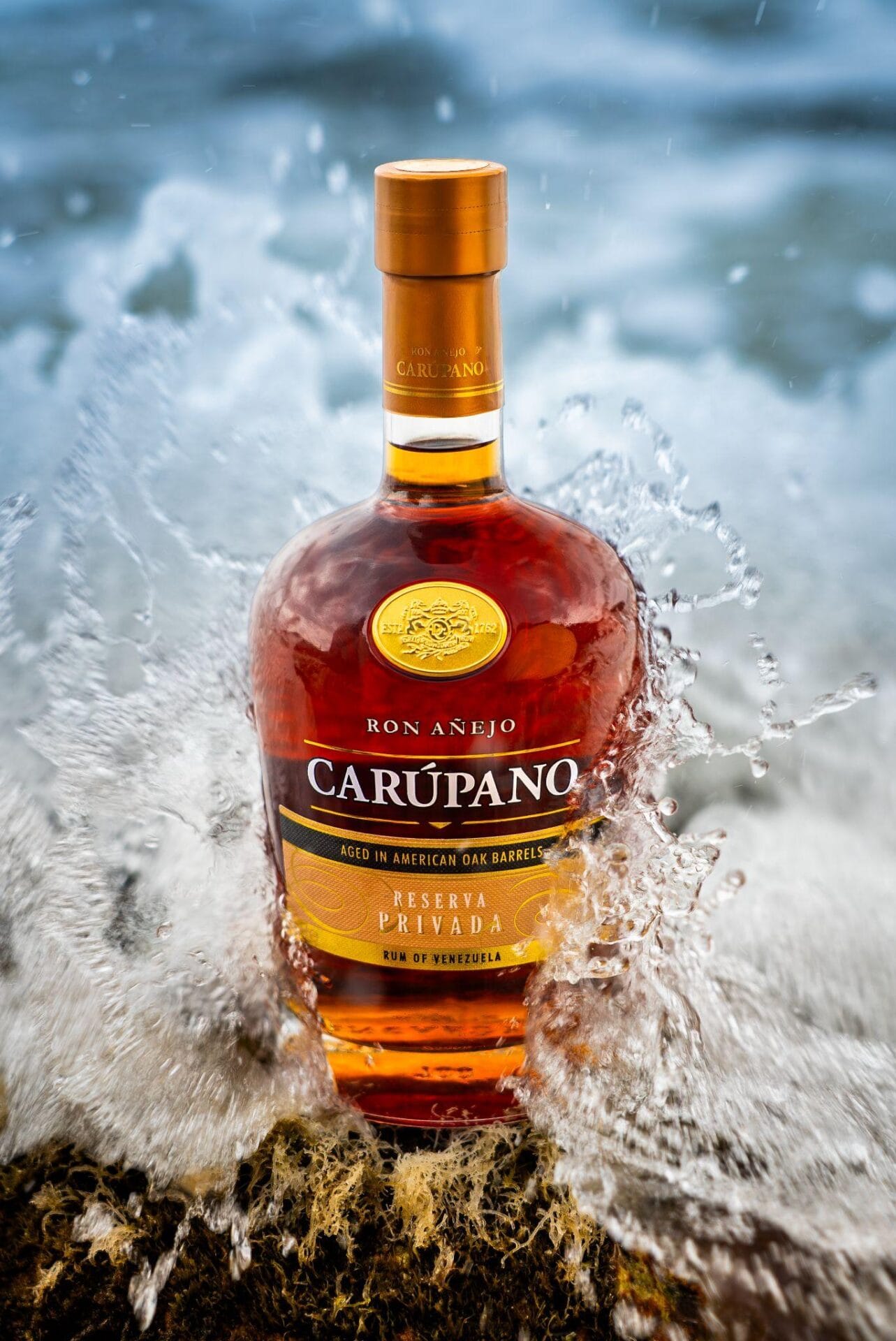
Explore our collection (start with Reserva Privada, the rum in the photo) and find the rum that’s right for you.
Frequently asked questions
Does rum age faster in the Caribbean?
Heat, humidity and the contrast between day and night make the rum interact with the oak more intensely than in a cold cellar. That is why tropical aging is more active.
What is the angels’ share?
It is the small part of the rum that evaporates naturally from the barrel over the years. At Ron Carúpano it is never replaced.
Where does Ron Carúpano age?
At Hacienda Altamira, in the Macarapana Valley (Sucre state), 3.5 km from the Caribbean coast, in sealed ex-Bourbon American white oak barrels.

